Home › Walkway and Pathway Paving
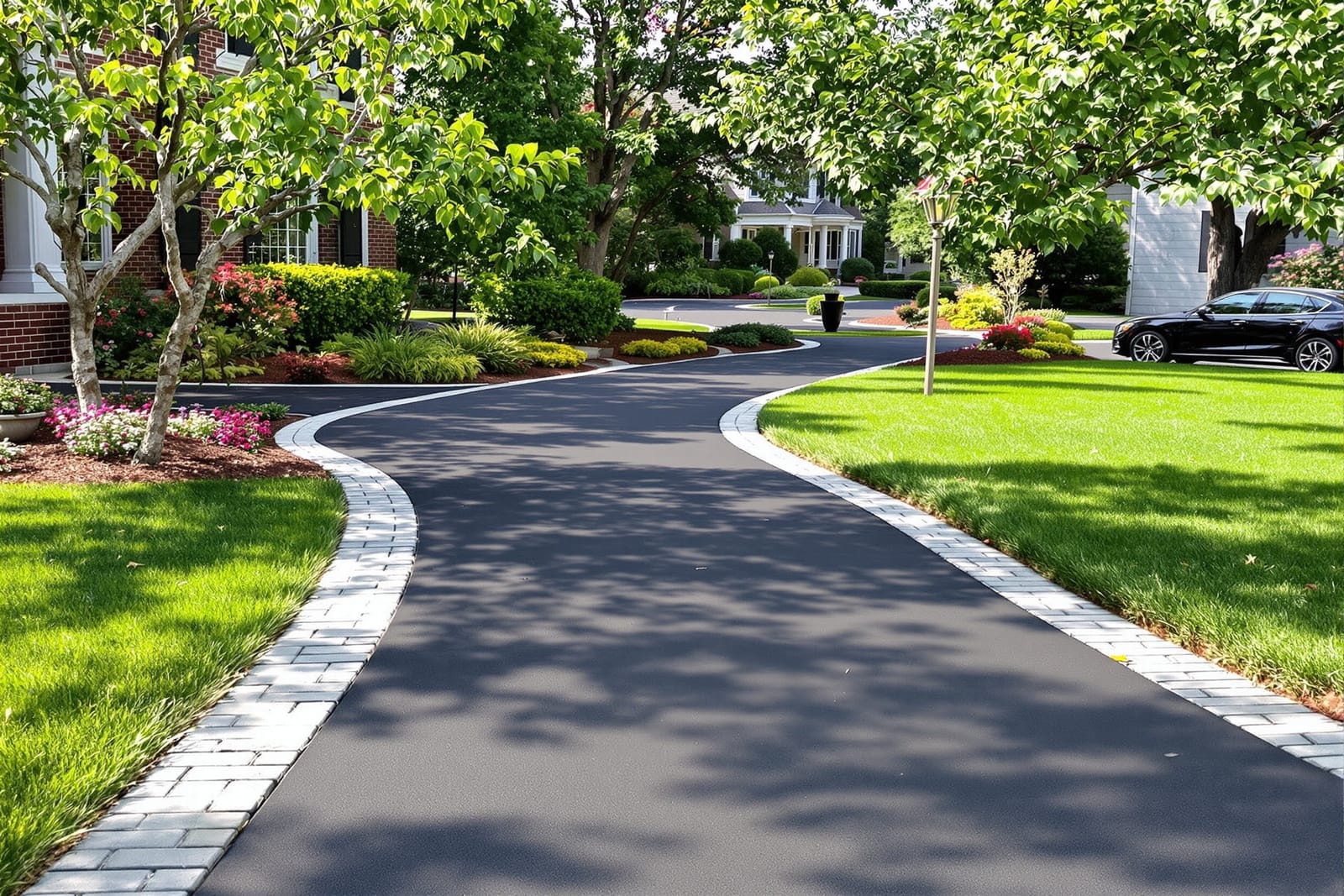
We offer asphalt walkway paving in Plano, TX to create smooth, safe paths around your home and yard. Our team designs and installs asphalt walkways for side yards, backyard access, and connections to driveways or patios. With a stable base and proper drainage, your new path will resist cracking and stay comfortable to walk on.
Precision Asphalt Plano provides professional asphalt walkway paving throughout Plano, TX, Texas and the surrounding area. Our licensed, insured crew delivers safe, clean, on-time work with a free estimate before anything begins. Call (469) 609-1491 or request your free quote.
Asphalt Walkway Paving for Homes, HOAs, and Businesses in Plano
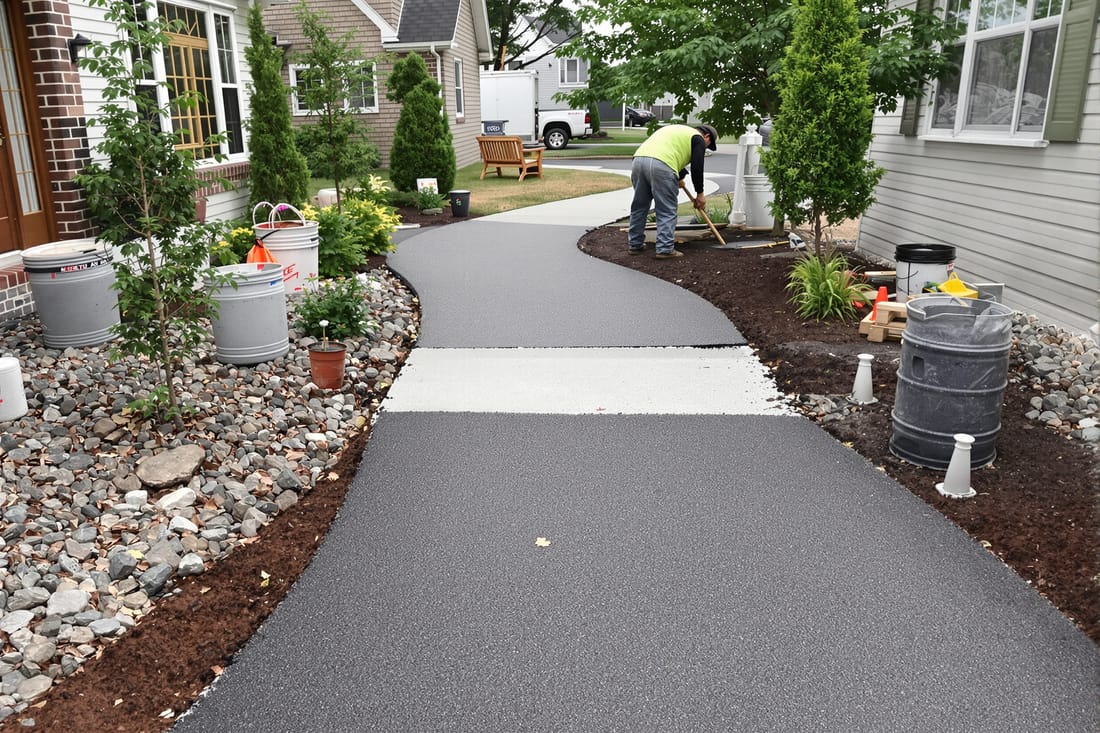
Precision Asphalt Plano builds and repairs asphalt walkways and pathways that fit how people actually move around your property. Whether it is a curved walking trail around a Plano HOA pond, a direct path from parking to a storefront, or a safe walkway from driveway to front door, we design the route, width, and surface to match real daily use.
In Plano, asphalt walkway paving works well because it stays flexible in summer heat, can be repaired in targeted sections, and gives good traction when it rains. We look at your site grading, existing concrete, landscaping, and irrigation so the new path ties in smoothly without creating trip hazards or drainage problems.
Our crew lives and works in this area, so we plan for North Texas soil movement, strong sun, and heavy downpours. That local experience affects everything we recommend, from base thickness to slope angles, so your new walkway looks good for years instead of just the first season.
Planning and Design: Layout, Width, Slope, and Access
Good walkway paving starts on paper, not with a roller. During your site visit, a Precision Asphalt Plano estimator walks the route with you and notes how people currently travel, where water collects after storms, and where tree roots or utilities could be an issue.
We discuss practical design questions: Should the path be straight for quick access or meandering for a park-like feel. Do you need room for two people to walk side by side, strollers, or occasional cart traffic. Typical residential walkways run 3 to 4 feet wide, while HOA and commercial paths often range from 5 to 8 feet, depending on expected use and ADA considerations.
Slope is especially important in Plano because of our heavy rain events. We typically build a cross slope of 1 to 2 percent so water sheds off the walkway instead of pooling, and we tie into existing concrete at doors, curbs, and ramps to keep transitions smooth. Where needed, we coordinate with you on adding curb cuts, handrails, or striping so the walkway is easy for everyone to navigate.
Step‑by‑Step: How Asphalt Walkway Paving Is Actually Done
Once the design is set, our crew follows a clear process so you know what to expect and how long your walkway will be out of service.
1) Utility and layout check. If excavation is required, we confirm utility locates before digging. We mark the path with paint and string lines so you can visually confirm the route.
2) Excavation and subgrade prep. We remove grass, topsoil, or old broken path materials to the depth needed, usually 6 to 10 inches for most walkways. In Plano’s clay soils, we pay close attention to soft spots, which are undercut and replaced so the pavement does not settle.
3) Installing the base. A compacted crushed stone base (often 4 to 8 inches thick depending on use and soil) is brought in and compacted in lifts with plate compactors or a small roller. The goal is a firm, uniform base that will not pump or rut when walked on.
4) Fine grading and forms. We shape the base to your final elevations and slopes, then set temporary forms or edges where needed to control the asphalt thickness and edges.
5) Asphalt placement. For walkways, we typically use a fine mix asphalt that compacts to a smoother surface than parking lot mixes. The mix is brought in hot, spread with small equipment and hand tools, and compacted with walk‑behind rollers or plate compactors to achieve a uniform, dense surface.
6) Edge finishing and clean up. We shape and compact the edges, backfill with soil where necessary, and clean up adjoining turf and landscaping so the new path looks intentional, not patched in.
Most smaller walkways can be completed in one day, with another day for fine clean up and, if needed, striping or markings.
Material Options, Surface Textures, and Curb Appeal Choices
Asphalt walkway paving is more flexible than many people realize. Precision Asphalt Plano can tailor the mix and surface finish to your property’s look and use.
For a standard residential walkway, we typically use a fine aggregate mix that compacts to a smooth but not slick surface. Around pools or areas with frequent water, we can slightly adjust the finish to leave more micro texture so shoes grip better when wet.
If you want the path to visually tie into higher end landscaping, we can discuss decorative options. These can include contrasting concrete borders along the edges, stone or brick accents at intersections, and colored seal coats that tone the surface to better match a patio or building facade. While traditional black asphalt is the most budget friendly, colored or textured seal coats can significantly improve appearance without the cost of fully decorative hardscape.
We also plan for long term maintenance during material selection. For example, in shaded areas under Plano’s mature oaks, leaves and moisture can linger. There we may recommend a slightly tighter mix and a specific sealant schedule to reduce staining and organic growth.
What Drives Cost for Asphalt Walkway Paving in Plano
Customers often ask why two walkways of similar length can be priced differently. The main cost drivers are below grade conditions, access for equipment, and the details at edges and tie‑ins.
Soil and drainage: Plano’s clay soil can vary a lot even on one property. If we find soft or saturated spots, we may need to undercut deeper and bring in more base material so the path will not settle. That extra base and labor affects cost, but it prevents future dips and cracks.
Access: A straight, open route from the street where a small roller can reach is more economical than a path that winds between trees and down into a backyard. Tight access can mean more handwork, smaller equipment, and more time.
Thickness and intended use: Light‑use garden paths can be built with a thinner asphalt layer and base. Walkways that will see golf carts, maintenance vehicles, or frequent deliveries need more structure. We always explain which thickness we are proposing and why, so you are not overbuilding or underbuilding for your needs.
Edges and transitions: Connecting to existing porches, slabs, or decorative stone, and creating clean borders along turf or beds, takes careful labor. If your design includes concrete or stone borders, that will be itemized so you see exactly where the budget goes.
Common Walkway Problems in North Texas and How We Prevent Them
Years of local work have shown us the same issues on poorly built walkways: trip lips at transitions, standing water, and early cracking from thin bases. Precision Asphalt Plano designs and builds with these problems in mind from the start.
Trip hazards usually appear where a new path meets old concrete that moves at a different rate, or where tree roots push up from below. We reduce these risks by stabilizing the base at tie‑ins, feathering transitions over a longer distance, and keeping large tree roots out of the structural section of the path whenever possible.
Standing water comes from flat or reverse slopes. In Plano’s sudden downpours, even a small low spot can hold water for days. During construction, our foreman checks slopes with levels and makes adjustments before compaction so water sheds in the direction we planned in design.
Early cracking is often the result of thin asphalt over a weak base. We verify compacted base thickness during installation and do not shortcut the compaction passes. For paths that will see more load than average, such as service cart routes, we may suggest a slightly thicker section or stronger base material and will explain the tradeoffs.
If your existing asphalt walkway already has problems, we can evaluate whether surface patching, partial depth repair, or full replacement makes the most sense. Sometimes, strategic base repair and overlay can extend life without completely rebuilding everything.
What to Expect When You Hire Precision Asphalt Plano
When you contact Precision Asphalt Plano for asphalt walkway paving, we start with a conversation about how the path will actually be used and who will be walking on it. We then schedule a site visit, take measurements, and provide a written proposal that breaks out base work, asphalt paving, and any optional items like borders or seal coating.
Before work begins, we go over the schedule and any temporary access changes. For homes, that might mean planning around work hours or school times. For businesses and HOAs, we often phase work so at least one safe route stays open.
On paving day, the crew lead will be your point of contact. We protect nearby turf, plants, and hardscape as we bring in equipment and materials. Once paving is complete, most walkways can be walked on within 24 hours, and sometimes sooner, depending on weather.
We also discuss maintenance before we leave. In Plano’s climate, a properly built asphalt walkway typically benefits from its first seal coat around 1 to 3 years after installation, then on a periodic schedule based on sun exposure and traffic. We give you a straightforward care plan so you know how to keep the surface looking good and performing well.
If you are planning a new asphalt walkway or need an evaluation of an older path, Precision Asphalt Plano can walk the site with you, explain options in plain language, and provide a clear, locally informed recommendation.