Home › Commercial Asphalt Resurfacing & Overlays
We offer commercial asphalt resurfacing in Plano, TX to refresh aging parking lots and drive lanes without full reconstruction. Our process repairs base failures, mills high spots, and then installs a new asphalt overlay. This restores a uniform surface, improves appearance, and extends the life of your pavement with less downtime for your business.
Precision Asphalt Plano provides professional commercial asphalt resurfacing throughout Plano, TX, Texas and the surrounding area. Our licensed, insured crew delivers safe, clean, on-time work with a free estimate before anything begins. Call (469) 609-1491 or request your free quote.
Commercial Asphalt Resurfacing in Plano: When It Makes Sense
Commercial asphalt resurfacing and overlays are for properties where the pavement is worn, cracked, and rough, but the base underneath is still solid. Precision Asphalt Plano starts by determining whether your lot or roadway is a good candidate. If the pavement has widespread alligator cracking, drain problems, or areas that move when heavy trucks turn, a simple overlay will not last. In those cases we recommend targeted base repairs before any resurfacing.
For typical Plano commercial properties like shopping centers, office parks, industrial drives, churches, and schools, resurfacing is often the most cost effective way to restore a clean, safe surface. It solves issues like raveling, faded striping, shallow potholes, and minor rutting without the cost of a full tear out. You keep your existing layout and grades, which means less disruption to tenants and customers.
The local climate matters. North Texas summer heat can soften old asphalt and accelerate rutting, while our occasional hard freezes can open up small cracks into bigger problems. Resurfacing lets us seal up those cracks and lay a new driving surface that is built for our weather. In Plano we typically target spring and fall for larger overlay projects, because temperatures and humidity help the new asphalt compact and cure correctly. We can work in summer and winter as well, but we adjust schedules and mix designs so the pavement performs as it should.
How Precision Asphalt Plano Handles Commercial Asphalt Resurfacing & Overlays
Our resurfacing process follows a clear sequence so you know what is happening on your property each day. We start with a site evaluation and core samples if needed. This tells us asphalt thickness, base condition, and whether there are hidden moisture problems. From there we design a resurfacing plan that may combine mill and overlay, patching, and crack repair.
On production day, we cone and barricade work zones and coordinate access with your management team so customers and tenants can still reach key entrances. The crew begins with cleaning. We sweep and power blow the surface, then mechanically scrub oil spots. A clean surface is the single biggest factor in whether an overlay bonds properly.
Next, we repair structural issues. This can include saw cutting failed areas, excavating soft base, compacting new aggregate, and installing a full-depth asphalt patch. We then route and seal larger working cracks so they do not reflect straight through the new surface as quickly. Once repairs are complete, we apply a tack coat, a thin adhesive asphalt emulsion, to every area that will receive new pavement. This tack coat bonds old and new asphalt into one working layer.
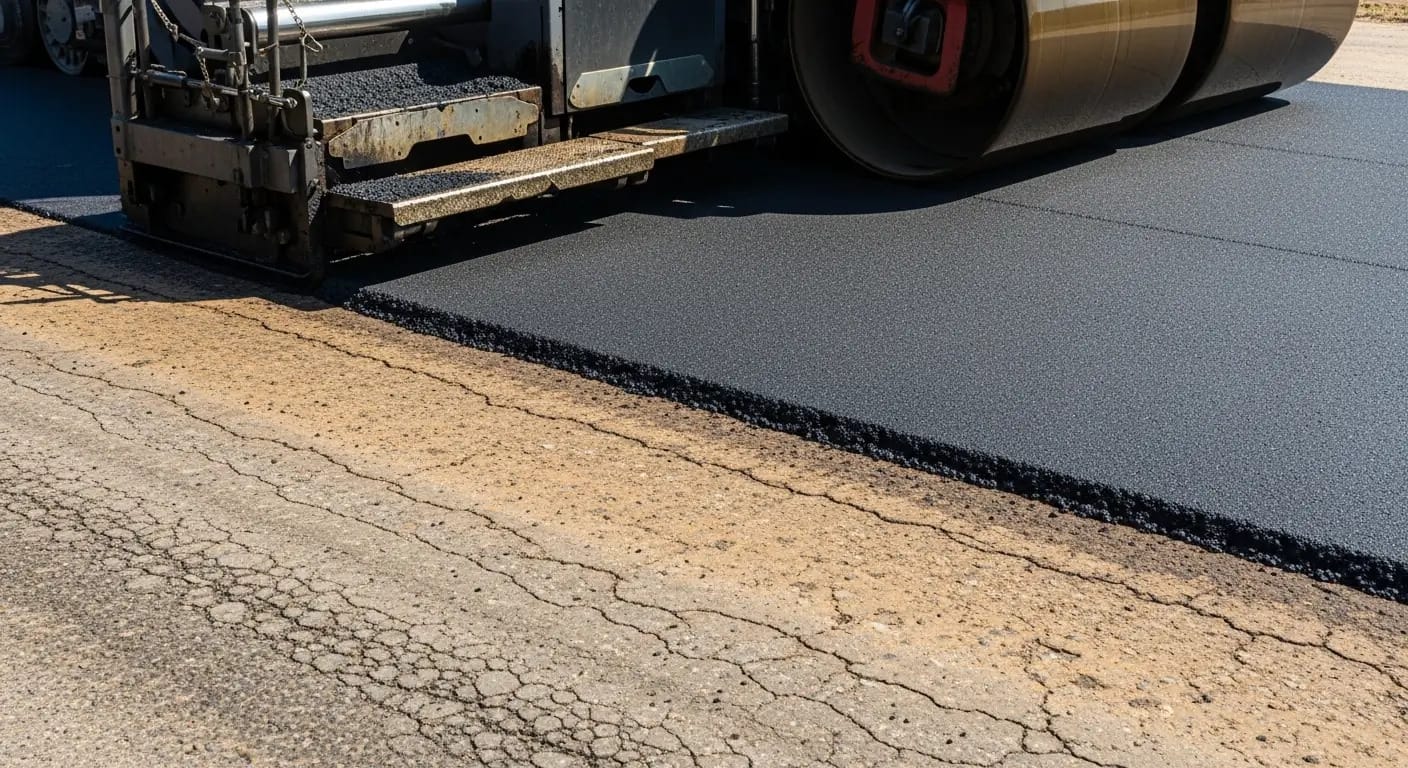
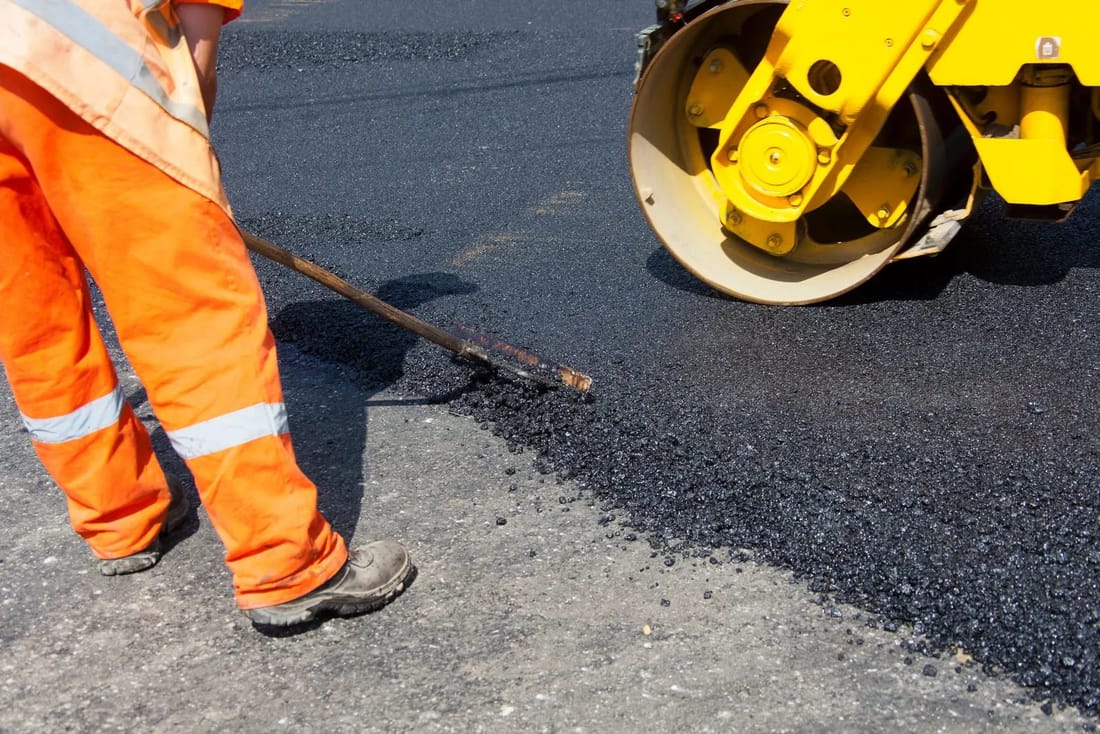
The overlay itself is installed with a paving machine to maintain correct slope and thickness. Our rollers follow directly behind the paver so the mat stays hot enough to compact to the specified density. Joints are staggered where possible, and we hand work transitions at approaches, ADA ramps, and drainage structures. After compaction, the mat is checked for smoothness and joint quality, and then we return to restripe and mark the lot according to your layout and Texas accessibility requirements.
Overlay Options, Thickness, and Material Choices
Commercial asphalt resurfacing is not one size fits all. Precision Asphalt Plano specifies different overlay thicknesses and mixes depending on traffic type, existing pavement condition, and your budget. Light duty parking areas with primarily passenger vehicles can often be resurfaced with a 1.5 inch overlay if the underlying asphalt is reasonably sound. Heavier traffic lanes, dumpster pads, and delivery routes usually need 2 inches or more, sometimes in multiple lifts, to avoid rutting and premature cracking.
We commonly use TXDOT approved hot mix asphalt designed for North Texas conditions. For truck lanes and industrial yards we may recommend mixes with harder aggregates and more stone for better rut resistance. In shaded or slow draining areas we might adjust the mix gradation to reduce moisture susceptibility. On properties where elevation is tight near door thresholds or drainage inlets, we can mill down the old surface first so the overlay does not raise grades and cause ponding.
If you are concerned about long term appearance and maintenance, we can plan for a sealcoat program two to three years after the overlay cures. This helps keep oils from oxidizing out of the new asphalt and preserves the black finish. For owners managing multiple properties around Plano and Collin County, we can standardize mix types and overlay thickness so performance and maintenance schedules are predictable across your portfolio.
What Drives the Cost of Commercial Asphalt Resurfacing
Several specific factors affect the price of commercial asphalt resurfacing in Plano, and understanding them will help you compare proposals fairly. The most obvious factor is overlay thickness and total square footage. A 2 inch overlay uses roughly one third more material than a 1.5 inch overlay, and asphalt is a petroleum product, so pricing follows fuel and oil markets.
Existing pavement condition is the next major driver. Lots with limited base failures and manageable cracking can be cleaned, tack coated, and paved more quickly. Properties with widespread failures, poor drainage, or old overlays that have delaminated require additional milling, patching, and sometimes undercutting. Those steps add crew time, trucking, and materials but are necessary if you want the overlay to last more than a few seasons.
Access and phasing also affect cost. Retail centers at busy Plano intersections often require night or off hour work so customer traffic is not interrupted. That means additional lighting, traffic control, and sometimes smaller work areas, which is less efficient. On the other hand, industrial parks with flexible hours and clear access can often be paved in larger passes, which reduces unit costs. Slope corrections, profile milling, and special requirements like thermoplastic markings, wheel stops, and custom signage will also show up in pricing.
Precision Asphalt Plano itemizes these components in our proposals so you know exactly what you are buying. This is important when you are comparing quotes, because a cheaper price can mean less thickness, minimal base repair, or skipping necessary crack treatment, all of which reduce the life of your new surface.
Common Problems and How We Prevent Overlay Failures
Most commercial asphalt resurfacing failures in North Texas are predictable and avoidable if you know what to look for. One common issue is reflective cracking, where old cracks reappear in the new overlay. While no overlay can completely eliminate this over the long term, we reduce it by addressing the underlying cracks first with routing and sealing or localized reconstruction, and by choosing an overlay thickness appropriate for the pavement movement expected.
Another frequent problem is slippage or shoving of the top layer in high traffic turning areas like entrances, drive lanes in front of storefronts, and dumpster pads. This usually shows up as ripples or waves in the asphalt. It is nearly always a bonding or mix selection issue. Precision Asphalt Plano prevents this by thoroughly cleaning and tacking the surface, using the right mix design for heavy turn areas, and not overlaying over existing loose sealcoat or mud.
Drainage problems are also common after overlays if the contractor adds thickness without correcting slopes. Water that used to run off may begin to pond, which accelerates stripping and potholes. Before paving, we laser check critical areas around drains, building entries, and ADA routes. If grades are already tight, we mill down the existing surface or perform wedge milling to keep water moving off the pavement.
Finally, inadequate compaction is a hidden problem that shortens pavement life. It looks fine at first, but air voids allow water and oxygen to get into the mat, leading to early raveling and cracking. Our crews monitor rolling patterns, mat temperature, and number of roller passes so densities meet industry standards. This attention to detail matters more in Plano’s hot summers, when asphalt can cool unevenly in shaded versus sun exposed areas.
Planning, Phasing, and Scheduling for Plano Commercial Properties
Successful commercial asphalt resurfacing on an active property is as much about planning as it is about the asphalt itself. Precision Asphalt Plano begins with a phasing plan that keeps key entrances and fire lanes open. For retail centers, we often divide the lot into sections and work during low traffic windows, such as overnight for front drives and early morning for outlying parking fields. Office and medical complexes may prefer weekend work so patient and employee access remains simple during the week.
Timing the work to Plano weather patterns helps the finished surface last longer. Spring and fall usually provide the best paving conditions, with warm days and cooler nights that support proper compaction and cure. In summer we adjust start times earlier in the day, schedule breaks through peak heat, and monitor mix temperature closely to avoid tenderness. In winter we watch overnight lows and only pave when surface and air temperatures allow proper bonding.
Before work begins, we provide you with a simple communication plan for tenants, including maps that show which areas are closed on which days, what vehicles should move, and when striping will be complete. On properties that serve trucks, we coordinate routes with your carriers to minimize downtime. After the overlay, we go over cure times, when to allow light vehicles versus heavy trucks, and how to avoid scuffing from tight steering while the surface is new.
Our goal is to leave you with a smooth, well drained, and clearly marked asphalt surface that fits your operating schedule and budget, and that holds up to Plano traffic and weather for many years.