Home › Industrial and Heavy-Duty Asphalt Paving
We provide industrial asphalt paving in Plano, TX for facilities that see constant heavy vehicle traffic. Our team designs thicker asphalt sections, reinforced bases, and proper drainage for truck yards, loading docks, and warehouse approaches. The result is a durable surface that resists rutting and pumping under loaded axles.
Precision Asphalt Plano provides professional industrial asphalt paving throughout Plano, TX, Texas and the surrounding area. Our licensed, insured crew delivers safe, clean, on-time work with a free estimate before anything begins. Call (469) 609-1491 or request your free quote.

Industrial Asphalt Paving Built for Plano’s Toughest Worksites
Precision Asphalt Plano specializes in industrial and heavy-duty asphalt paving that stands up to forklifts, loaded semis, container stacks, and 24/7 traffic. Our focus is on building pavements that perform under real world industrial abuse, not just look good on opening day.
We design and install asphalt systems for distribution centers, manufacturing plants, trucking yards, utility sites, fuel depots, and large commercial complexes throughout Plano and the north Dallas industrial corridor. From the first site walk to final striping, our crews understand how Texas heat, clay soils, and heavy axle loads work together to break down a poorly built pavement, and we engineer around those realities.
Industrial asphalt paving is not simply “thicker parking lot asphalt.” We evaluate subgrade support, drainage, expected traffic mix (truck percentages, turning movements, storage loads), and maintenance access. Then we specify base thickness, asphalt layer structure, and mix designs to match. The result is a pavement system with a predictable life cycle and lower total cost of ownership for your Plano operation.
How We Design Heavy-Duty Asphalt for Industrial Loads
Our design process starts with a detailed site assessment. Precision Asphalt Plano evaluates soil conditions with test pits or boring data when available, checks existing pavement performance, and walks truck routes with your facility or operations manager. We map turning radii, loading dock approaches, trailer parking angles, and high stress pinch points like gate entries and fuel islands.
Based on this information, we assign load categories to different zones of your site. For example, we might call out 18 wheeler turning lanes, static trailer storage, forklift traffic near docks, and employee car parking as four distinct pavement types. Each zone then receives a specific asphalt structure and base section. High stress truck corners can receive thicker asphalt lifts or a full depth asphalt design, while car parking can use a lighter but still durable section.
We typically recommend a flexible pavement structure that might include 6 to 12 inches of compacted crushed base over prepared subgrade, topped with 3 to 6 inches of industrial grade asphalt in multiple lifts. For very high load areas, we may specify polymer modified asphalt or a stone matrix asphalt surface to improve rut resistance and shear strength. All of this is documented in a clear, written proposal so you know exactly what you are getting and why it was specified.
Materials and Mix Options for Industrial Asphalt Paving
Precision Asphalt Plano works closely with local asphalt plants to select mixes that are proven under Texas industrial traffic. We are not locked into a single mix design. Instead, we match aggregate size, binder grade, and air void targets to your specific use.
For loading docks and tight truck maneuvers, a finer graded surface with a stiffer binder can resist shoving and scuffing from power steering and slow speed torque. In heavy storage lanes where rutting is the main risk, we often use coarse graded base and intermediate lifts that distribute loads more effectively, then cap with a dense surface mix for smoother travel and easier cleaning.
High temperature performance is critical in Plano, where surface temperatures can exceed 150 degrees on summer afternoons. We typically choose binders rated for these conditions and may use polymer modification in extreme locations, such as fuel terminals or high volume distribution hubs operating around the clock. When existing concrete or older asphalt is in play, we consider milling, leveling courses, or stress relief layers to reduce reflection cracking and create a uniform platform for new industrial asphalt paving.
Step by Step: Our Industrial Paving Construction Process
On industrial and heavy-duty asphalt paving projects, process control is as important as design. Precision Asphalt Plano uses a systematic approach so your pavement performs as designed.
First, we handle demolition and removal, recycling old asphalt where possible and hauling unsuitable materials from the site. Next, we proof roll the exposed subgrade using fully loaded trucks or rollers to identify soft spots. Any yielding areas are undercut and replaced with better structural material to avoid future settlement.
We then build the base course. Crushed limestone or recycled concrete base is spread in controlled lifts, typically 4 inches at a time, then compacted to a specified density using vibratory rollers. Cross slopes and crown are shaped at this stage to ensure long term drainage. In industrial settings, we pay special attention to transitions at dock plates, trench patches, and manholes so that equipment is not subjected to jarring impacts.
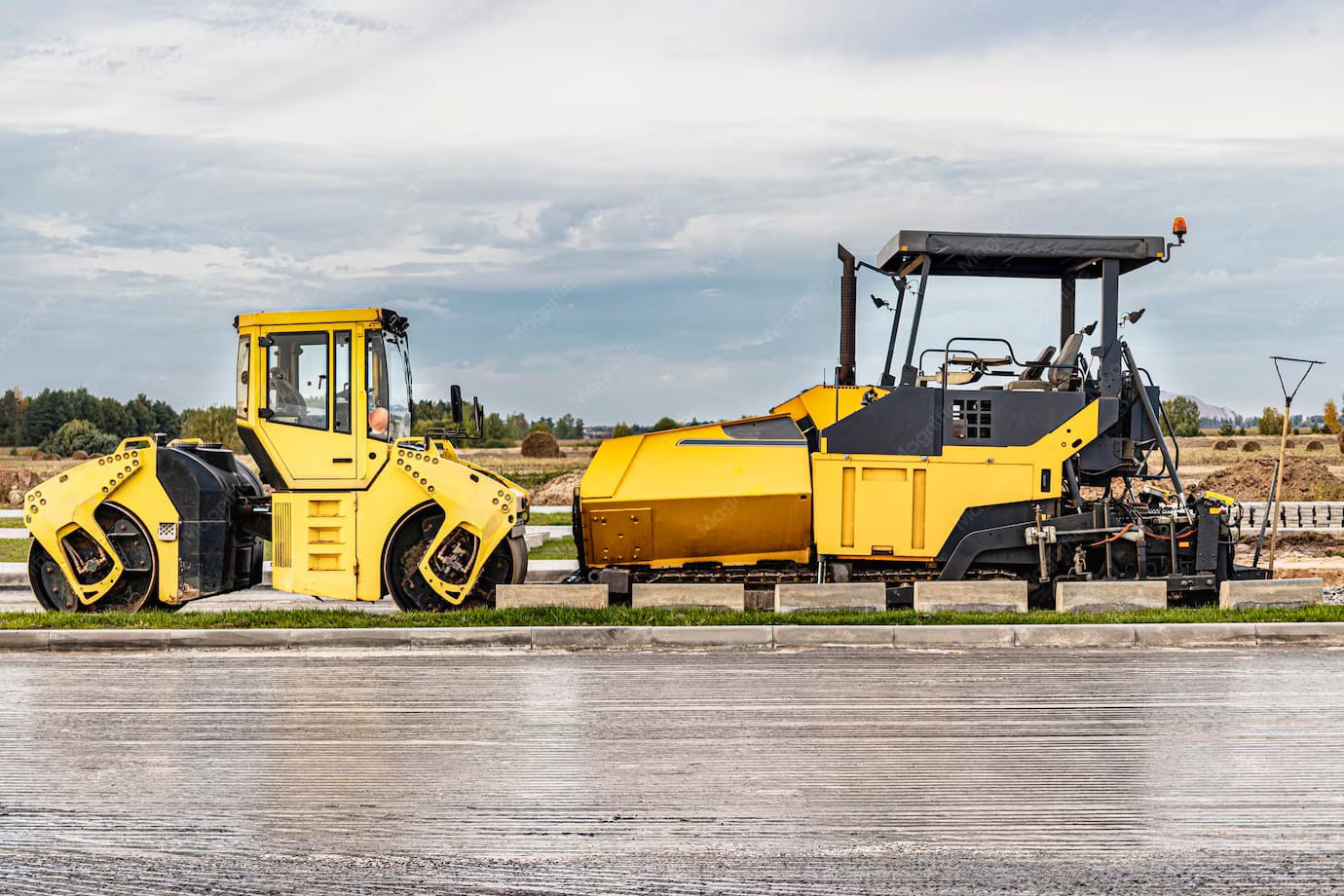
Once the base is approved, asphalt placement begins. We install binder and surface courses in separate passes, using a self propelled paver and steel drum rollers. Joint locations, compaction patterns, and rolling temperatures are managed carefully because poor joints and low density are common failure points in heavy-duty pavements. Finally, we complete striping, wheel stop placement, and any signage or traffic control devices required to put the facility into operation.
Local Factors in Plano That Affect Industrial Pavement Performance
Industrial pavements in Plano face a specific combination of stresses that builders from other regions may underestimate. Expansive clay soils are common, and if subgrade moisture is not managed, seasonal heave and shrink can crack even thick pavements. Precision Asphalt Plano designs with moisture control in mind, often incorporating lime treated subgrade, stabilized base, or improved drainage structures on problematic sites.
Intense summer heat combined with high truck volumes can accelerate rutting, especially in slow moving queues at guard shacks and scale houses. We anticipate these hotspots during design and may specify stiffer mixes or thicker asphalt in those locations. Plano also sees more intense storm events than in the past, so undersized drainage can lead to standing water and premature stripping or raveling of the asphalt.
Our crews know the local industrial corridors along US 75, President George Bush Turnpike, and SH 121, and we understand how city requirements, utilities, and existing traffic patterns affect construction sequencing. That familiarity lets us stage work to keep your facility operating, coordinate inspections with Plano and nearby jurisdictions when needed, and select working hours that minimize impact on your shipping and receiving schedules.
Cost Drivers, Budget Planning, and Phased Construction
Industrial asphalt paving is a significant capital investment, and Precision Asphalt Plano is transparent about what drives cost so you can plan effectively. The largest factors are existing subgrade conditions, required base thickness, total square footage, and the percentage of area under heavy truck load versus car traffic.
Sites with poor or saturated soils may need undercut, lime stabilization, or thicker base material to achieve reliable support. These steps add upfront cost but usually prevent much larger repair expenses within a few years. Heavier truck traffic and tighter turning areas require more asphalt tonnage and higher performance mixes, which also influence price.
To match your budget and operations, we often develop phased construction plans. For example, we may rebuild the most distressed truck lanes and dock approaches this year, then tackle trailer storage and overflow areas later. We can also design pavement structures with future thickening in mind, leaving room to add an additional asphalt overlay in 8 to 12 years without major reconstruction. Clear itemization in our proposals lets facility managers and property owners see where every dollar goes and evaluate options such as thicker initial sections versus planned future overlays.
What to Ask Before You Hire an Industrial Asphalt Contractor
If you manage an industrial property in Plano, choosing the right paving contractor is critical. Ask for specific examples of completed industrial and heavy-duty asphalt paving jobs, not just retail parking lots. Precision Asphalt Plano provides references from distribution centers, manufacturing facilities, and trucking yards with similar traffic patterns so you can see how our pavements are performing after years of service.
Request written pavement designs showing total section thickness, base type, asphalt lift breakdown, and anticipated traffic load assumptions. If a contractor cannot explain why a certain thickness or mix type is recommended, you may not be getting a true industrial solution. Inquire about compaction targets for both base and asphalt and how density is verified. We follow strict density ranges that align with heavy-duty performance requirements.
Finally, ask how the contractor plans to maintain your operations during construction. On active industrial sites, we frequently schedule night or weekend work, set up temporary traffic patterns, and coordinate closely with your dock and yard managers. Our goal is to deliver long lasting industrial asphalt paving with minimal interruption to your shipping, receiving, and production schedules.